

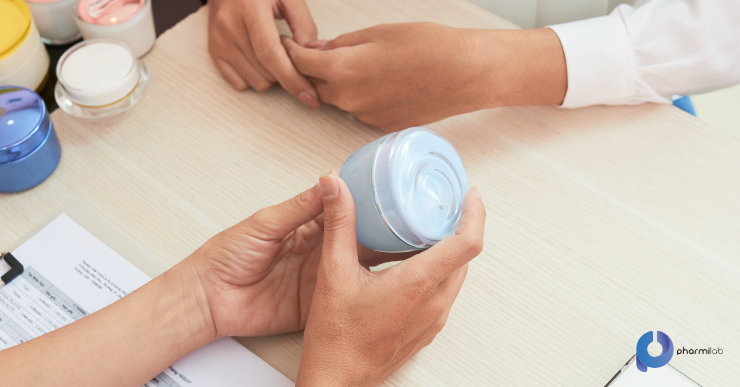



This situation has placed significant pressure on manufacturers, who are compelled to reformulate their products and rigorously ensure compliance with increasingly stringent national and international regulations, such as Regulation (EC) No 1223/2009, currently in force in the European Union.
The increased use of preservatives has created a growing need for their regulation and corresponding control, both in terms of identification and quantification.
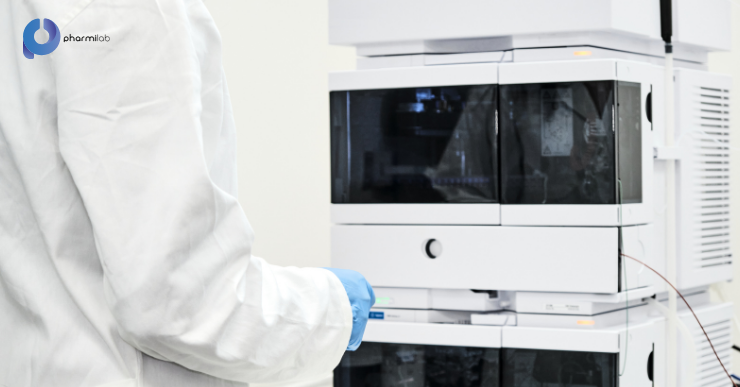
There are several analytical techniques that can assist us in this control, one of which is High-Performance Liquid Chromatography (HPLC).
The identification of these substances allows confirmation of the presence or absence of the preservative; meanwhile, quantification provides the value of its concentration, enabling monitoring over time with the goal of assessing its stability.
Thus, determination by HPLC allows the simultaneous analysis of multiple preservatives with high precision and lower detection limits, ensuring more sensitive and reliable results.
Have you already conducted these analyses on your products? You can count on Pharmilab’s support!